
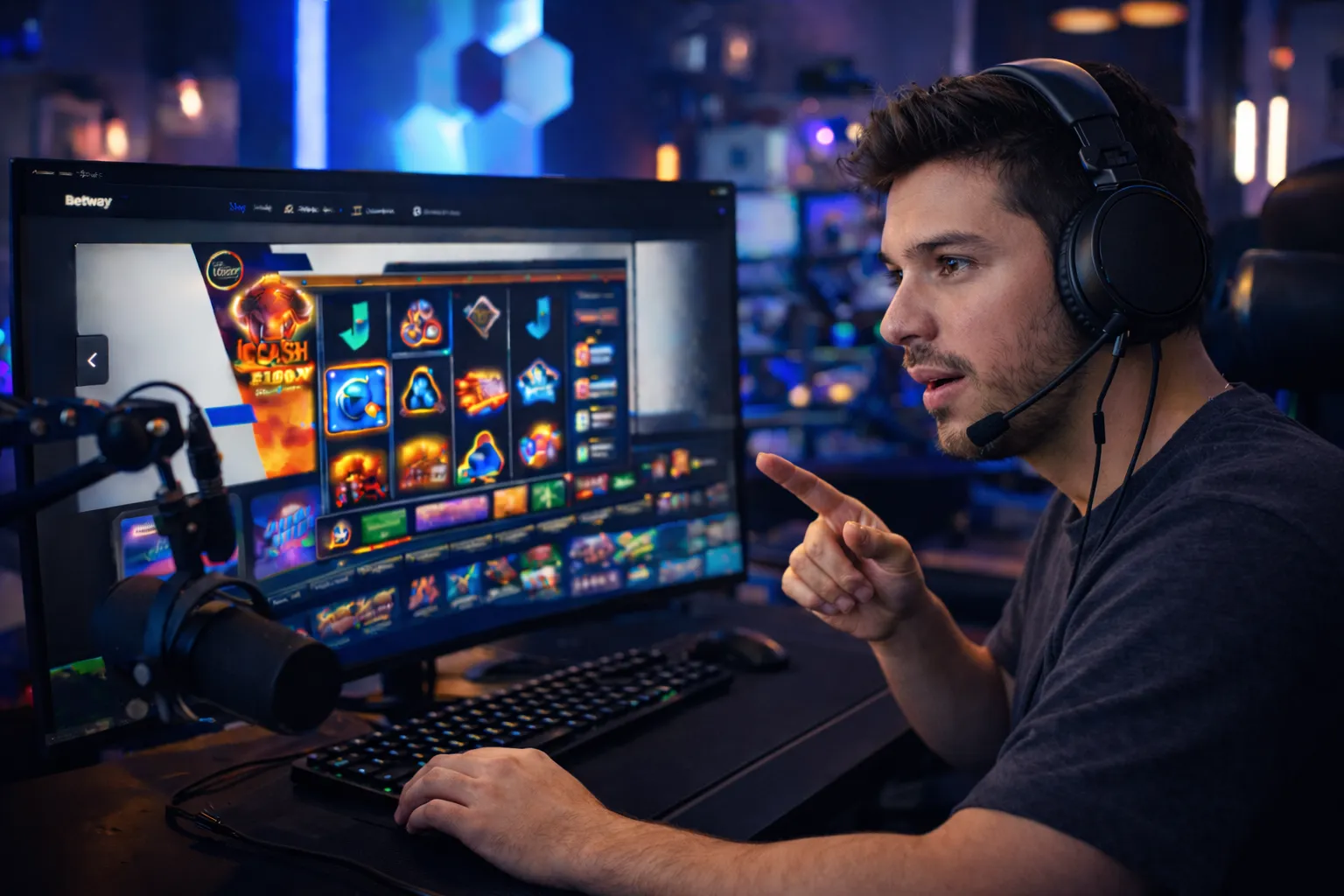

Founder & CEO
iGaming and Influencer Marketing: How the Industry Really Works and Why Professional Content Makes the Difference
The iGaming industry is one of the most competitive digital verticals in the world. In this context, influencer marketing has become one of the most effective channels to connect with relevant audiences. But it is also one of the most misunderstood.
The iGaming industry is one of the most competitive digital verticals in the world. Online casinos, betting houses, and gaming platforms compete in an environment where acquisition costs are high, regulation is demanding, and user retention defines the real profitability of the business.
In this context, influencer marketing has become one of the most effective channels to connect with relevant audiences. But it is also one of the most misunderstood. For it to work, visibility and big numbers are not enough: it requires structure, control, and a clear performance logic.
A Saturated Market, But Not Undifferentiated
Brands like Betano, Betsson, Estelarbet, Melbet, Pin-Up, NovaJackpot, Betway, Rushbet, or GGbet compete in markets where users have multiple options, similar bonuses, and increasingly fragmented attention.
The difference is no longer solely in the offer, but in how trust is built. And that's where influencer marketing plays a key role—always when executed correctly.
Why Influencer Marketing Fits So Well in iGaming
iGaming is not a traditional impulse purchase. The user deposits money, trusts a platform, and in many cases, develops recurrent behavior. This makes the acquisition channel a critical factor.
Influencers bring three fundamental elements for this type of industry:
Context and credibility: Streamers, tipsters, and specialized creators show the product in real use: bets, slots, gameplay, payments, wins, and losses. This reduces initial friction.
Highly segmented audiences: Gaming, sports, casino, or esports are not generic audiences. A well-selected creator concentrates users with real intent.
Continuous relationship: Unlike a one-off paid media campaign, the influencer builds narrative, habit, and repetition. That directly impacts retention and LTV.
However, these benefits only materialize when the channel is managed with professional criteria.
The Big Mistake: Treating Influencer Marketing as Awareness
For years, many iGaming brands used influencers as a visibility channel. The goal was to "be present," generate noise, or take advantage of traffic spikes. The problem is that this approach ignores the real nature of the business.
In iGaming, not all registrations are worth the same. A user who deposits once and disappears does not have the same value as one who plays recurrently for months. Therefore, measuring campaigns only by clicks or initial registrations leads to wrong decisions.
This is where the performance-first approach comes in, based on: - Verified real conversions - Quality of acquired user - Retention and post-registration behavior - Customer lifetime value (LTV)
Influencer marketing in iGaming cannot be evaluated as a superficial channel. It has to be integrated into the core of the business.
How a Well-Executed Strategy Works in iGaming
A solid influencer marketing strategy in online casinos is built on several clear pillars:
1. Talent selection based on data, not just audience It's not about who has the most followers, but who generates quality users. Campaign history, audience behavior, and product affinity are key.
2. Formats that favor conversion In iGaming, long formats usually outperform: Twitch or Kick streams, explanatory videos on YouTube, recurring content vs. isolated mentions. Short clips serve to feed the funnel, but rarely generate high-value users on their own.
3. Clear tracking and attribution Codes, links, anti-fraud systems, and behavior verification are essential. Without this, it's impossible to separate real traffic from opportunistic incentives.
4. Continuous optimization Campaigns are not "launched and forgotten." They are adjusted based on CPA, retention, and LTV. Influencers who don't meet objectives are optimized or discarded; those who do, are scaled.
The Critical Role of Control and Anti-Fraud
iGaming is especially vulnerable to low-quality traffic: bonus hunters, fake registrations, or non-human behavior. That's why influencer marketing in this sector requires advanced control systems.
Detecting anomalous patterns, filtering invalid traffic, and protecting the budget is not optional. It is a central part of a sustainable strategy.
Brands that ignore this point usually inflate short-term metrics, but lose profitability in the medium term.
Influencer Marketing as a Real Growth Engine
When executed correctly, influencer marketing stops being an experiment and becomes a structural acquisition channel for iGaming. It doesn't replace other channels, but complements them with something that few can offer: trust built in real time.
Leading brands in the sector are no longer asking whether to work with influencers, but how to do it better, with more control, more data, and absolute focus on real results.
At Miela, we work influencer marketing for iGaming with a clear logic: performance, operational control, and focus on LTV.
We design and manage campaigns with specialized creators, anti-fraud systems, and real measurement of results, helping casino and betting brands scale without compromising traffic quality.
Discover how we professionalize influencer marketing in iGaming at miela.cc
Related Articles
The FIFA World Cup Is Already Underway: Why Influencers Are Key for Brands
The FIFA World Cup 2026 is already underway, and influencers are turning each match into a shared streaming experience, creating strong visibility opportunities for brands.
How to Identify Creators Who Generate High-Value Users
The best creator is not necessarily the one who generates the most registrations, but the one who attracts the highest-value users. Learn how to identify them.
Why Clips Go Viral and How to Position Your Brand in Them
Short-form clips have become one of the most powerful tools for both creators and brands. Learn how to position your brand within viral moments before they happen.