

Chief Marketing Officer
AI Is Changing Influencer Marketing, But Human Talent Still Wins
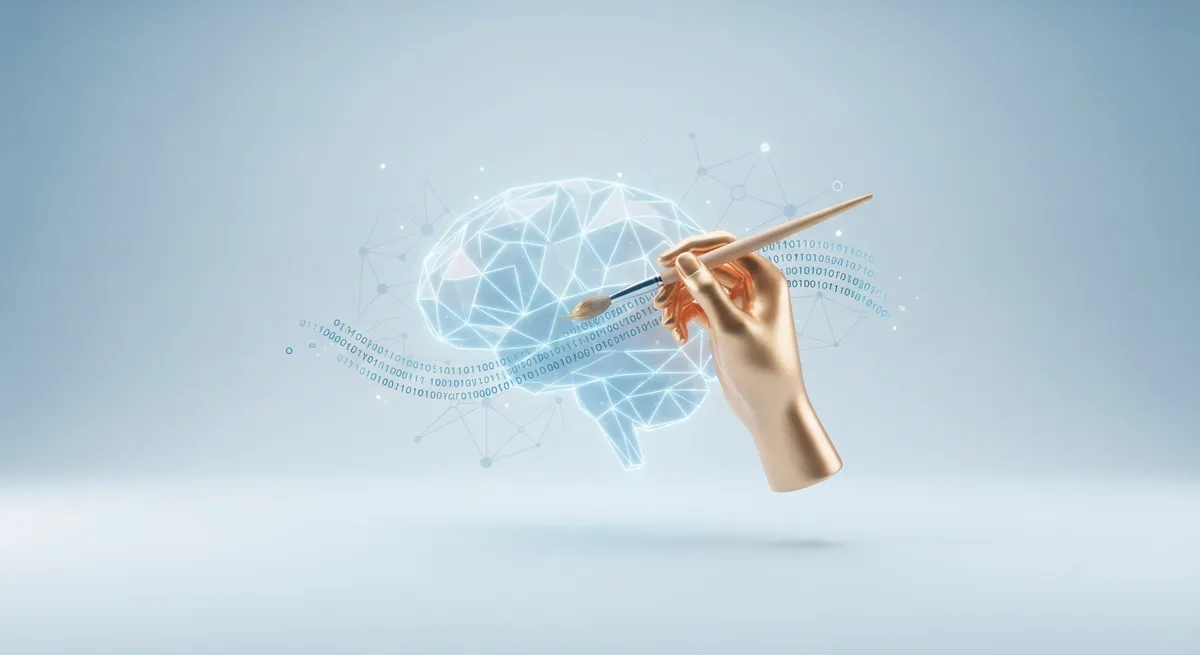
Artificial intelligence is transforming influencer marketing through automation and analytics, but human creativity, trust, and authentic relationships remain the foundation of successful campaigns.
Artificial intelligence has rapidly become one of the most transformative technologies in modern marketing. In just a few years, it has evolved from a tool primarily associated with automation into a strategic resource capable of analyzing audiences, identifying creators, forecasting campaign performance, and generating insights that previously required weeks of manual work.
The gaming industry has been among the first to embrace these capabilities. Publishers, agencies, and creator platforms now rely on AI to process enormous volumes of data, optimize marketing investments, and improve operational efficiency. Tasks that once demanded countless hours of research—such as discovering creators, comparing engagement metrics, or evaluating campaign performance—can now be completed in minutes.
Yet despite these technological advances, one reality remains unchanged.
Marketing has always been about people.
Algorithms can organize information, but they cannot create genuine relationships. They can identify patterns, but they cannot understand the emotional connection between a creator and the community they have spent years building. As artificial intelligence becomes increasingly integrated into influencer marketing, the competitive advantage is no longer defined by simply adopting new technology. It lies in knowing where technology ends and human expertise begins.
AI Is Solving the Industry's Most Time-Consuming Challenges
One of the greatest contributions of artificial intelligence is its ability to eliminate repetitive tasks that have traditionally consumed marketing teams.
Finding suitable creators for a campaign, for example, often requires evaluating hundreds or even thousands of profiles. Teams must compare audience demographics, engagement rates, content categories, languages, regions, posting frequency, historical collaborations, and dozens of additional variables before reaching a shortlist.
Artificial intelligence dramatically accelerates this process.
Modern platforms can analyze large creator databases in seconds, identify profiles that match highly specific criteria, and generate recommendations based on historical performance instead of intuition alone. Similar improvements are occurring across campaign reporting, fraud detection, audience segmentation, budget optimization, and predictive analytics.
For agencies and publishers managing campaigns across multiple regions, these efficiencies represent a significant competitive advantage.
Instead of replacing marketing professionals, AI allows them to dedicate more time to strategic thinking and creative decision-making.
Better Data Leads to Better Decisions
The rapid growth of creator marketing has made data increasingly valuable.
Follower counts, once considered the primary indicator of influence, now represent only a small fraction of the information required to evaluate campaign potential. Today's marketing teams examine audience quality, retention, engagement patterns, demographic alignment, viewing behavior, conversion history, and numerous other performance indicators before selecting creators.
Artificial intelligence makes it possible to interpret these complex datasets at a scale that would be nearly impossible through manual analysis.
Patterns that remain invisible to human observation can emerge quickly through machine learning models capable of processing millions of interactions simultaneously.
This has fundamentally changed how campaigns are planned.
Rather than relying exclusively on previous experience, marketers can now support strategic decisions with predictive models that estimate campaign outcomes before budgets are committed.
However, data alone does not guarantee better marketing.
It simply creates the opportunity to make better-informed decisions.
Authenticity Cannot Be Predicted by an Algorithm
While AI excels at identifying measurable patterns, influencer marketing depends on many variables that cannot be reduced to numerical models.
A creator's credibility is built over years of consistent interaction with their audience. Their tone of voice, communication style, sense of humor, personal values, and relationship with their community all contribute to the effectiveness of a collaboration.
These qualities are difficult to quantify.
Two creators may present nearly identical performance metrics while producing completely different outcomes for the same campaign. One partnership may feel authentic and generate enthusiastic community participation, while another appears transactional despite similar audience statistics.
The difference often lies in factors that data alone cannot explain.
Understanding cultural context, audience expectations, creative chemistry, and long-term brand alignment continues to require human judgment.
Artificial intelligence can recommend possibilities.
People determine which relationships are worth building.
The Best Campaigns Begin With Strategy, Not Software
As AI becomes more accessible, many organizations are tempted to view technology as the starting point for campaign planning.
In reality, successful campaigns still begin with strategic questions.
Who is the ideal player?
What communities should the brand become part of?
Which creators genuinely share the values of the game?
What type of content encourages long-term engagement rather than short-term curiosity?
Technology provides valuable answers only after these questions have been clearly defined.
Without strategic direction, even the most advanced algorithms simply optimize the wrong objectives more efficiently.
The organizations achieving the strongest results are not necessarily those using the most sophisticated AI platforms.
They are the ones integrating technology into a clearly defined marketing strategy guided by human expertise.
AI Is Enhancing Creativity Rather Than Replacing It
There has been considerable discussion about whether artificial intelligence will eventually replace creative professionals.
Within influencer marketing, the opposite appears to be happening.
By automating research, reporting, and administrative processes, AI gives marketers more time to focus on creative thinking, relationship building, campaign concepts, and storytelling.
Creators benefit from similar efficiencies.
They can organize workflows more effectively, analyze audience feedback faster, generate content ideas, and optimize production schedules without sacrificing their unique creative identity.
The technology becomes an accelerator rather than a substitute.
Audiences continue following creators because of their personality, perspective, and authenticity—not because of the software they use behind the scenes.
That human element remains impossible to automate.
Trust Remains the Industry's Most Valuable Asset
Every successful creator economy is built on trust.
Audiences trust creators because they have consistently delivered content that feels honest, entertaining, and relevant. Brands succeed when they become part of that trusted relationship rather than interrupting it.
Artificial intelligence can strengthen this process by improving creator selection, measuring campaign performance more accurately, and identifying opportunities that might otherwise remain hidden.
It cannot manufacture credibility.
Trust develops gradually through transparency, consistency, and meaningful interactions between creators and their communities.
For this reason, brands that prioritize long-term relationships consistently outperform those focused exclusively on short-term campaign efficiency.
Technology improves execution.
Trust determines results.
The Future Belongs to Human-AI Collaboration
The conversation surrounding artificial intelligence often presents a false choice between humans and machines.
The reality is considerably more nuanced.
The future of influencer marketing will not be defined by AI replacing marketers, agencies, or creators. Instead, it will be shaped by organizations capable of combining technological efficiency with uniquely human capabilities.
Artificial intelligence will continue improving how campaigns are planned, executed, and measured.
Human professionals will continue providing the creativity, empathy, strategic thinking, and relationship-building skills that transform marketing activities into meaningful experiences.
The strongest organizations will recognize that these strengths are complementary rather than competitive.
What This Means for Brands
Artificial intelligence should no longer be viewed as an optional competitive advantage. It has become an essential component of modern marketing operations, enabling faster decisions, greater analytical precision, and more efficient campaign management.
However, technology alone is unlikely to differentiate brands in the years ahead.
As AI becomes widely available, competitive advantage will increasingly depend on the quality of the relationships brands establish with creators and the communities they serve.
Organizations that combine intelligent technology with authentic human collaboration will be best positioned to build sustainable growth in an increasingly automated industry.
Miela Insight
At Miela, technology has always been a means to an end rather than the end itself. Artificial intelligence enables us to discover creators faster, analyze performance more deeply, identify opportunities earlier, and optimize campaigns with greater precision. These capabilities allow our teams to spend less time processing information and more time understanding the people behind it.
But successful influencer marketing has never been driven solely by data. It is built on trust, communication, creativity, and communities that develop over time. The most valuable partnerships emerge when technology supports human expertise instead of attempting to replace it.
As AI continues to reshape the industry, the brands that create lasting impact will not be those with access to the most advanced algorithms. They will be the ones that use those tools to strengthen authentic relationships, empower creators, and deliver experiences that resonate with real people.
Because technology may power the future of marketing, but Human Talent remains the engine behind every meaningful connection.
Related Articles

The FIFA World Cup Is Already Underway: Why Influencers Are Key for Brands
The FIFA World Cup 2026 is already underway, and influencers are turning each match into a shared streaming experience, creating strong visibility opportunities for brands.
How to Identify Creators Who Generate High-Value Users
The best creator is not necessarily the one who generates the most registrations, but the one who attracts the highest-value users. Learn how to identify them.

Why Clips Go Viral and How to Position Your Brand in Them
Short-form clips have become one of the most powerful tools for both creators and brands. Learn how to position your brand within viral moments before they happen.